

No products in the cart.
News
Wall Paneling – A Modern Interior Decoration Solution Combining PU Moldings and PU Patterns

13
Jun
Jun
Wall paneling has become a leading trend in interior design, providing elegance, modernity, and protecting walls from environmental impacts. When combined with PU moldings and PU patterns, this solution not only enhances aesthetics but also creates subtle focal points, suitable for styles ranging from minimalist and modern to neoclassical.
PU moldings with delicate lines and PU patterns featuring unique motifs—such as lotus flowers, the Four Symbols, or European designs—elevate the sophistication of any space. This combination delivers a perfect look, is more cost-effective than traditional materials like natural wood or stone, and is easy to install and maintain.
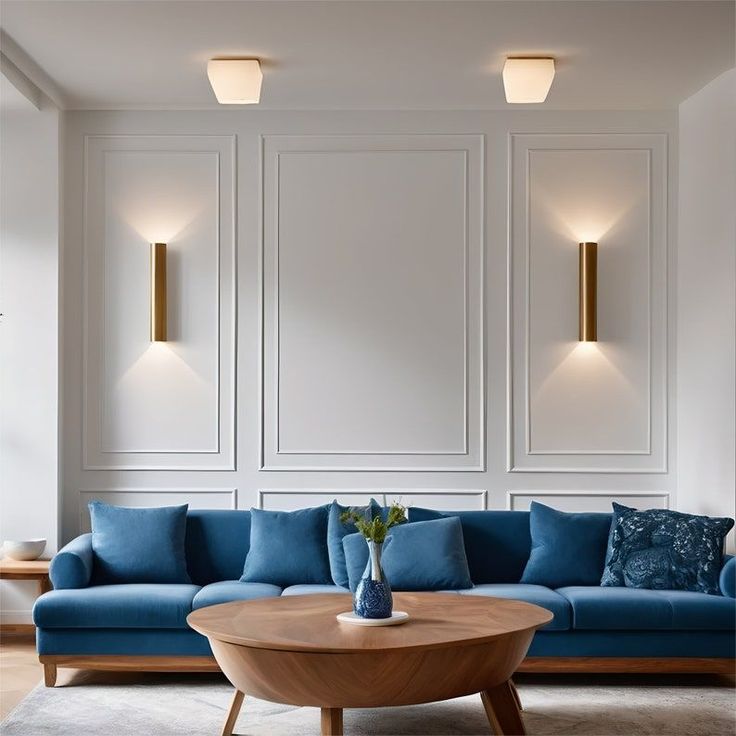
Characteristics: Made of lightweight PVC, with a glossy surface or imitation wood and stone patterns, resistant to water and fire spread.
Advantages:
Affordable, ranging from 200,000–600,000 VND/m².
Easy to install, lightweight, no complex framework required.
Suitable for Vietnam’s humid climate, especially for kitchens and bathrooms.
Disadvantages:
Less luxurious appearance compared to wood or stone.
Prone to scratches if not coated with a protective layer.
Moderate durability (7–10 years).

1.4. Natural/Engineered Stone Wall Panels
Characteristics: Natural stone (granite, marble) or engineered stone with unique patterns and solid structure.
Advantages:
High durability, lifespan over 30 years.
Provides a premium aesthetic, suitable for villas and hotels.
Good water and stain resistance.
Disadvantages:
Heavy weight, requiring a strong frame, increasing installation costs.
High price, from 1.5–4 million VND/m² depending on the type of stone.
Complex installation requiring skilled labor.
1.5. 3D Wall Panels (Gypsum, Composite)
Characteristics: 3D panels made from gypsum or composite materials, featuring unique embossed patterns that can be painted in custom colors.
Advantages:
Creates strong visual accents, ideal for creative spaces such as cafes and spas.
Affordable price, from 400,000–1 million VND/m².
Easy to customize in color and design.
Disadvantages:
Requires high technical skill for proper installation and durability.
Not suitable for very humid environments if using gypsum.
2. Benefits of Combining Wall Panels with PU Molding and PU Patterns

2.1. Enhanced Aesthetics
PU Molding: With its intricate lines, PU molding creates soft frame borders and harmoniously divides wall panel spaces. Gold-leaf, white, or painted molding designs add a luxurious touch, particularly suitable for neoclassical styles.
PU Patterns: Designs such as lotus flowers, Four Divine Beasts, European motifs, or 3D geometric patterns provide unique focal points. For example, a white PVC wall panel combined with geometric PU patterns creates a modern look, while lotus PU motifs emphasize elegance in a worship space.
2.2. Durability and Flexibility
PU Molding and PU Patterns: Made from high-quality polyurethane, they are moisture-resistant, warp-proof, and termite-free. These materials are compatible with all types of wall panels, including wood, PVC, stone, or 3D panels.
Flexibility: PU molding and patterns can easily complement various interior styles, from modern and minimalist to classical. They can be painted, gold-leafed, or left white to match any design scheme.
2.3. Cost Savings
Affordable: PU molding and patterns are significantly cheaper than natural wood or stone (approximately 50,000–200,000 VND per meter for PU molding, 200,000–500,000 VND per panel for PU patterns) while still providing a high-end look.
Easy Installation: Lightweight and easy to cut and install, reducing labor costs and construction time compared to heavier materials like stone.
2.4. Versatile Applications
Suitable Spaces: Ideal for living rooms, bedrooms, hotels, restaurants, spas, showrooms, and creative offices.
Application Examples:
Wall panels in living rooms with 3D PU patterns create an artistic focal point.
Kitchen wall panels framed with PU molding provide elegance and cleanliness.
Spa decorations with leaf or floral PU patterns create a relaxing environment.
3.Suggestions for Combining Wall Paneling with PU Molding and PU Patterns
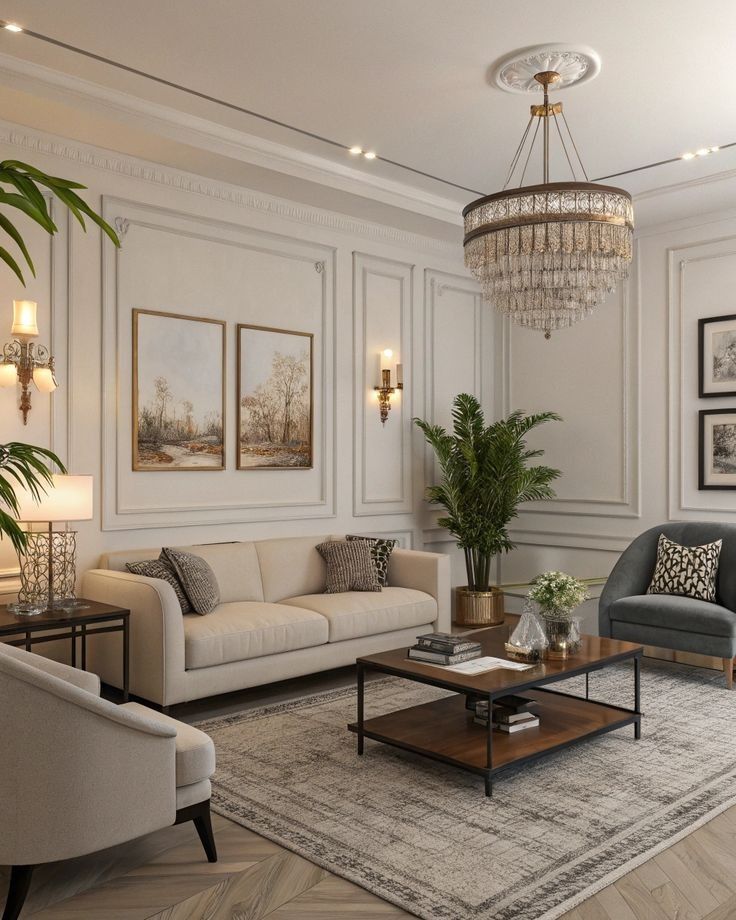
3.1. Neoclassical Style
Description: Combine wall panels made of engineered wood (MDF with wood-grain Laminate) or artificial stone with gold-accented PU molding and classic PU patterns (European motifs, lotus designs). The PU molding creates elegant framing, while the PU patterns serve as central highlights.
Example: Cover the living room wall of a villa with walnut-grain engineered wood panels, white PU molding with gold accents, and a central lotus PU pattern as the focal point of the wall.
Applications: Villa living rooms, hotel lobbies, high-end restaurants.
Benefits: Creates a luxurious, upscale space suitable for projects with high aesthetic requirements.
3.2. Modern Style
Description: Use smooth white PVC panels or 3D composite panels combined with simple white PU molding and minimalist 3D PU patterns (geometric shapes, straight lines). This design offers a youthful, contemporary look.
Example: Install a white PVC wall panel behind a bedroom bed, framed with white PU molding in a rectangular shape, with a small geometric PU pattern accent at the upper corner.
Applications: Bedrooms, creative offices, showrooms.
Benefits: Creates a neat, elegant space that coordinates easily with modern interiors.
3.3. Minimalist Style
Description: Combine 3D gypsum or composite panels with thin PU molding and compact PU patterns (leaf shapes, simple circles). This design emphasizes minimalism while maintaining subtle highlights.
Example: Cover a staircase wall with 3D composite panels featuring wave patterns, thin white PU molding, and a gentle leaf-shaped PU pattern at the lower corner.
Applications: Staircases, hallways, small spaces such as apartments.
Benefits: Offers a refined, understated elegance, reduces complexity, and saves costs.
3.4. Worship Spaces
Description: Use natural wood wall panels (e.g., Lim or Huong wood) combined with feng shui PU patterns (dragons, phoenixes, lotus, tứ linh) and gold-accented PU molding to create a solemn, luxurious atmosphere.
Example: Decorate a family altar with dark red natural wood panels, framed with gold-accented PU molding, and a central tứ linh PU pattern as a feng shui symbol for good fortune.
Applications: Ancestral halls, family altars, spiritual spaces.
Benefits: Enhances a solemn and elegant atmosphere, aligns with Vietnamese cultural practices, and brings luck and peace.
4.Hướng dẫn thi công ốp vách tường kết hợp phào chỉ PU và hoa văn PU

4.1. Preparation of Materials and Tools
Materials:
Wall panels: Choose the appropriate type (natural wood, engineered wood, PVC, stone, 3D panels) based on style and budget. For example, PVC for modern style, natural wood for worship spaces.
PU molding and PU patterns: Select from SinhGroup with suitable sizes and designs (molding width 5–10 cm, PU patterns 30×30 cm or larger depending on the design).
Adhesives and accessories: Specialized PU glue (Titebond, SinhGroup PU glue), 3M double-sided tape, screws, nails, and underlayment if needed.
Tools:
Cutting machines (wood cutter, PVC cutter, or CNC machine for stone).
Measuring tape, L-square, permanent marker, spirit level, roller.
Drill, glue gun, microfiber cloths, mild cleaning solution.
Protective film to prevent material scratches.
4.2. Installation Process
Step 1: Measure and cut materials
Measure the wall accurately (tolerance <1 mm) using a measuring tape and spirit level.
Mark and cut wall panels (wood, PVC, stone) with the appropriate cutting tool. For stone, use a wet saw to prevent cracking.
Cut PU molding with a handsaw or angle cutter, ensuring it fits the wall panels.
Verify dimensions by temporarily placing the materials on the wall.
Step 2: Prepare the wall surface
Clean dust and grease using a microfiber cloth and mild cleaning solution. For kitchen areas, use a degreasing solution.
If the wall is uneven, sand it with P120 sandpaper to smooth the surface. Apply a waterproof primer (e.g., Kova, Dulux) to improve adhesion.
Ensure the wall is completely dry (moisture <16%).
Step 3: Install wall panels
Wood/PVC: Use PU glue or double-sided tape, start from the lower corner, and press evenly with a roller to avoid air bubbles.
Stone: Install a steel or wooden frame, secure stone panels with specialized adhesive and screws.
3D panels: Glue with PU adhesive, ensuring the patterns are aligned evenly.
Check the flatness with a spirit level and add screws for extra stability if needed.
Step 4: Install PU Molding
Apply PU glue to attach the molding around the panel. Press firmly and secure with clear tape for 24 hours.
Paint or gold-leaf the PU molding (if desired) to enhance aesthetics.
Step 5: Install PU Patterns
Choose the placement of PU patterns (center or corner depending on the design) and mark with a permanent marker.
Glue with PU adhesive, press firmly, and check alignment using a spirit level.
Wipe the surface of the PU patterns with a soft cloth.
Step 6: Finishing and Inspection
Clean the entire surface with a microfiber cloth and mild cleaning solution.
Check the flatness, adhesion, and aesthetics of the panels, PU molding, and PU patterns.
Fill gaps or fix peeling with additional adhesive.
4.3. Notes for Installation
Clean surface: Ensure the wall is dry and clean for strong adhesion.
Protective coating: Use PU paint or water-based paint to protect PU molding and patterns, enhancing durability.
Pattern alignment: Carefully check the position and straightness of the PU patterns to avoid misalignment.
Work safety: Wear gloves and safety goggles when cutting materials to prevent dust or debris injuries.
Installation environment: Maintain temperature at 20–30°C and humidity below 70% to ensure proper adhesive bonding.
5. Why Choose Solutions from SinhGroup?


7. Frequently Asked Questions (FAQ)
1. Are wall panels combined with PU moldings and PU patterns durable?
Yes. PU moldings and PU patterns are made from high-quality polyurethane, resistant to moisture, warping, and termites. When combined with wall panels such as engineered wood, PVC, or stone, their lifespan can reach up to 20 years if properly installed and regularly maintained.
2. How long does it take to install wall panels and PU moldings?
Installation time depends on the area and complexity. For a wall of approximately 5–10 m², complete installation (including wall panels, PU moldings, and PU patterns) typically takes 2–3 days. If using stone or requiring a frame, it may take an additional 1–2 days.
3. Are wall panels suitable for Vietnam’s humid climate?
Yes. Wall panels such as PVC, artificial stone, and Melamine/Laminate coated engineered wood are moisture-resistant and suitable for Vietnam’s climate. PU moldings and PU patterns are also moisture-resistant and warp-proof, ensuring durability in hot and humid conditions.
4. Are PU moldings and PU patterns easily scratched? How can they be protected?
PU moldings and PU patterns have easy-to-clean surfaces but can be scratched by strong impacts. To protect them, keep protective film during installation, use soft cloths for cleaning, and apply a PU or water-based coating to increase durability. Avoid using sharp objects on the surface.
5. Can PU moldings and PU patterns be used outdoors?
PU moldings and PU patterns are primarily designed for interior use. Outdoors, they may be affected by direct sunlight and high humidity. If used outdoors, apply UV-resistant and waterproof coatings and place them where they are protected from direct rain.
6. How to choose PU moldings and PU patterns suitable for a space?
Neoclassical: Choose gold-accented PU moldings and classic PU patterns (lotus, European designs).
Modern/Minimalist: Choose thin white PU moldings and simple geometric PU patterns.
Worship spaces: Choose PU patterns with feng shui motifs (dragons, phoenix, tứ linh) and gold-accented PU moldings. Contact SinhGroup via hotline 0968 921 269 for guidance on suitable designs.
7. How much does it cost to install wall panels with PU moldings and PU patterns?
PVC: 200,000–600,000 VND/m²
Engineered wood: 500,000–1,500,000 VND/m²
Artificial stone: 1,500,000–4,000,000 VND/m²
PU moldings: 50,000–200,000 VND per linear meter
PU patterns: 200,000–500,000 VND per panel
Contact SinhGroup for a detailed quote based on your specific design.